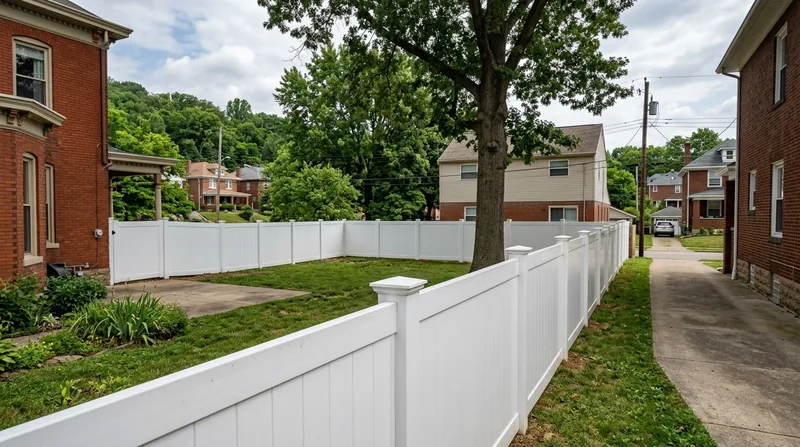




Vinyl & PVC fence installation in Cincinnati offers homeowners a durable, low-maintenance alternative to wood that stands up to the region's humidity and variable weather. Unlike wood, vinyl resists rot, warping, and insect damage at the ground line, making it a practical choice for privacy fences, picket styles, and ranch-rail layouts across Cincinnati neighborhoods from Indian Hill to West Chester. We install manufacturer-backed vinyl panels with correct post spacing and concrete-set footings, skipping the shortcuts that lead to sagging rails and loose pickets. The material works well in most Cincinnati yards, though it carries a higher upfront cost than wood and performs differently in specific site conditions. This guide covers what vinyl fencing is, how installation works, what it costs, and how to choose the right installer for your property.
Why Vinyl Fencing Matters in Cincinnati Residential Areas
Cincinnati homeowners often face a choice between wood and vinyl when privacy or property boundaries matter. Vinyl eliminates the seasonal maintenance that wood demands: no staining, no sealant reapplication, no replacement of rotted pickets or rails. In neighborhoods with deed restrictions or HOA architectural standards, vinyl is frequently approved because it holds color and appearance for years without fading or graying. The material performs consistently across Cincinnati's varied lot sizes and orientations, from shaded yards in Madeira to sun-exposed properties in Mason.
- Vinyl resists moisture damage at post footings where wood typically fails first.
- No painting, staining, or annual sealing extends the time between maintenance visits.
- Panels remain straight and level longer than wood boards in high-wind or frost-prone exposures.
- Vinyl is often accepted by HOA boards in master-planned communities across Greater Cincinnati.
- Color options include white, gray, tan, and cedar-tone profiles that suit most architectural styles.
These advantages make vinyl a solid choice when durability and appearance consistency are priorities over the lowest initial cost.
Key info: Vinyl fencing in Cincinnati must meet local height and setback rules set by the city or county where your property sits. Check with your municipal building department and review any HOA architectural guidelines before ordering materials. Deed restrictions in older Cincinnati neighborhoods may limit material choices even when the city permits vinyl.
For a detailed comparison with wood fencing, see our guide to Wood & Privacy Fence Installation in Cincinnati.
How Vinyl & PVC Fence Installation Works in Cincinnati
Proper vinyl installation begins with utility locating, continues through post setting and panel alignment, and ends with hardware and cap installation. Each step affects how long the fence stands straight and whether panels stay level through freeze cycles and seasonal ground movement. We follow manufacturer specifications for post spacing, concrete depth, and panel support to avoid the sagging and racking that shortcuts create.
Our installation process runs like this:
- Call 811 to locate underground utilities before any digging begins, as required by Ohio law.
- Mark the fence line using the property survey or the location you identify on your lot.
- Set posts in concrete at the depth and spacing vinyl manufacturers specify, typically 6 feet on center.
- Install rails and stringers level, using a transit or laser to catch settling before panels go up.
- Fit panels into post sleeves or rails, leaving manufacturer-specified gaps for thermal expansion.
- Attach caps and trim, secure all fasteners, and inspect the completed run for plumb and level.
Taking time at the post stage prevents the racking and sagging that homeowners often mistake for poor materials when the real cause is shallow footings or posts set in tamped soil instead of concrete.
Example: A 120-linear-foot vinyl privacy fence in Springdale typically takes 3 to 4 working days from layout through final inspection, assuming no underground obstacles and straightforward site access. Wet soil or utility conflicts add time, which is why we call 811 and do a site walk before quoting the schedule.
Learn more about our approach to Fence Repair if your existing fence needs attention before a new installation.
Vinyl & PVC Fence Installation Methods and Options
| Method | Description | Best For |
|---|---|---|
| Vinyl Privacy Fence | Solid panels in 6 or 8-foot heights, post-and-rail frame, full coverage for complete screening | Property lines, pool areas, yards requiring total privacy from neighbors or street |
| Vinyl Picket Fence | Spaced pickets on rails, typically 3 to 4 feet tall, decorative appearance, light and air flow | Front yards, property definition, decorative boundaries in Cincinnati residential areas |
| Vinyl Ranch Rail | Two or three horizontal rails between posts, no pickets, open post-and-rail structure | Acreage, pasture boundaries, decorative rural or semi-rural properties in Hamilton or Fairfield |
| Vinyl Semi-Privacy | Alternating solid and open sections or angled pickets, partial screening with some visibility | Properties where some privacy is needed but complete blocking is not desired |
| Stepped or Racked Installation | Panels follow grade changes by stepping down or racking to match sloped terrain | Hilly Cincinnati lots where the ground rises or falls significantly across the fence line |
Each method offers different aesthetics and functionality. Vinyl picket fencing works well in front yards and master-planned communities, while privacy panels suit backyards and pool areas. Ranch rail is popular on larger properties in the outer Cincinnati area.
Vinyl & PVC Fence Installation Cost in Cincinnati: What to Expect
Vinyl fence cost in Cincinnati starts at $38 per linear foot for standard privacy panels with basic post and rail assembly. The total price depends on panel height, profile style, post spacing, site conditions, and whether the ground requires excavation or concrete work beyond standard post holes. A 100-linear-foot privacy fence at 6 feet tall typically runs $3,800 to $5,200 installed, while decorative picket or ranch-rail styles may cost less per foot because they use less material.
Factors that move the cost up or down include:
- Panel height: 4-foot picket fence costs less than 6 or 8-foot privacy panels.
- Site access: Steep terrain, rocky soil, or limited equipment access adds labor and time.
- Existing fence removal: Tearing out an old fence before vinyl installation adds material and disposal cost.
- Gate installation: Each gate opening requires a frame and hardware, increasing the total by $400 to $800 per opening.
- Utility obstacles: Underground lines, irrigation, or drainage systems may require hand-digging or route changes.
The best way to get an accurate number is a free, no-obligation site estimate. We respond within 24 hours at (513) 951-6598 and can usually quote by phone if you know your linear footage and height preference. For detailed pricing on all fence types, visit our pricing overview.
Real example: A 150-linear-foot vinyl privacy fence in West Chester with a double gate, installed on level ground with standard post and concrete work, typically runs $5,500 to $7,000 depending on panel profile and color choice. A similar fence on a sloped lot or with difficult site access could run 10 to 20 percent higher.
Vinyl & PVC Fence Installation Near Me: What Cincinnati Homeowners Should Know When Hiring
Choosing the right installer matters more than the material itself. A fence installed to manufacturer spec with proper post depth and concrete footings stands level for decades. The same fence installed with shortcuts or poor post setting fails within a few years, costing you money and frustration. When you call for an estimate, ask about insurance coverage, how the crew handles utilities and permits, and whether they offer a warranty on materials and labor.
Here is what to verify before you hire:
- Confirm the installer is fully insured with general liability and workers' compensation coverage, and ask for a certificate of insurance.
- Understand that Ohio issues no state license for fence work, so licensing is set by the city or county where your property sits and requirements vary widely.
- Check whether your city or county requires a fence permit and ask the installer to handle the paperwork or confirm you know the process.
- Review any HOA architectural guidelines or deed restrictions on your property before materials are ordered.
- Get 2 to 3 estimates from different installers and compare scope, materials, warranty, and timeline, not just price.
- Ask for references from recent jobs in Cincinnati and call at least two homeowners to ask about the quality of work and whether the fence still looks good.
An honest installer walks your property, explains what works and what does not, and proposes repair before replacement when an existing fence can be saved. We have been in business since 2015 and hold membership in the American Fence Association, which sets professional standards for our trade.
Ready to get started? Contact us for a free estimate or call (513) 951-6598 to discuss your vinyl fencing project.
Vinyl & PVC Fence Installation in Cincinnati: Pricing Guide
| Service | Price | Details |
|---|---|---|
| Vinyl Privacy Fence | Starting at $38/ft | Standard 6-foot panels with posts set in concrete, includes labor and basic hardware installation |
| Vinyl Picket or Ranch Rail | Starting at $28/ft | Decorative styles with spaced pickets or horizontal rails, lower material cost than solid privacy panels |
| Gate Installation | $400 to $800 per gate | Includes frame, hinges, latch hardware, and alignment; each additional gate opening adds to total fence cost |
| Existing Fence Removal | $8 to $15 per linear foot | Tear-out and disposal of old wood, vinyl, or chain-link fence before new installation begins |
| Travel and Estimate | Included / Free | No mileage fee for Cincinnati and surrounding areas; free estimate with 24-hour response at (513) 951-6598 |
Indicative pricing, the exact cost depends on square footage, finish, and site access. Free personalized estimate within 24h at (513) 951-6598.


