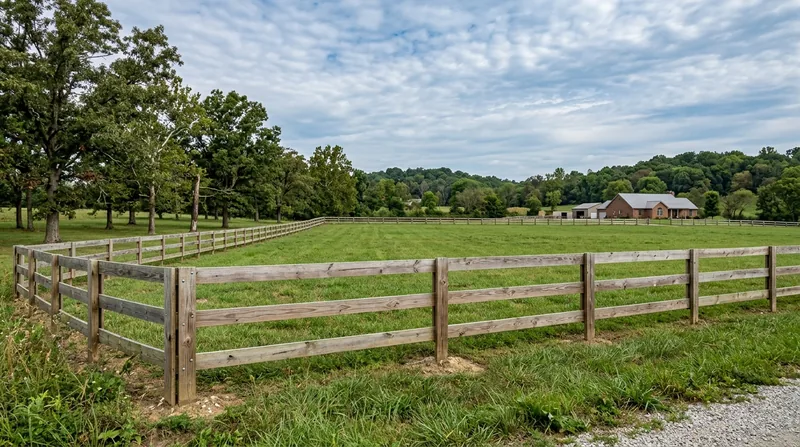




Farm & Ranch Fencing in Cincinnati | Cincinnati Fence Company
Property owners across Greater Cincinnati with acreage, pastures, and working land rely on farm fence installation to contain livestock, define boundaries, and protect investments. Whether you manage a few acres in Mason, a horse operation in West Chester, or a larger holding in the surrounding counties, the right fence system handles weather, animal pressure, and years of use without constant repair. Cincinnati Fence Company has installed and repaired ranch and agricultural fencing since 2015, working with landowners who need straight lines over long runs, properly braced corners, and gates that accommodate trailers and equipment. We work from your property line, install to local code, and size every component to the job. Call (513) 951-6598 for a free estimate, or read on to understand what farm and ranch fencing costs, how it's built, and what to look for when hiring.
Why Farm & Ranch Fencing Matters in Greater Cincinnati
Acreage in and around Cincinnati sits on varied terrain, and fencing that works on one property may not be ideal on another. A ranch fence installation for horses demands different specifications than a perimeter fence for a working farm or a boundary line marked with split rail. Livestock need secure enclosure; pasture rotation requires moveable or sectional systems; long property lines demand materials and post spacing that resist sagging and wind load over distance.
- Horses and livestock require no-climb or field-fencing systems that prevent injury and escape.
- Split rail and post-and-rail fencing define property lines with a clean, traditional appearance suitable for residential acreage.
- Pipe fencing offers strength for high-traffic areas, loading zones, and corrals where animals and equipment move regularly.
- Barbed wire or field wire fencing serves perimeter and pasture subdivision at lower cost per linear foot than solid rail systems.
- Proper post spacing, concrete-set footings, and corner bracing prevent sagging and keep fencing square over years of exposure.
The right system saves money on repairs and keeps animals where they belong.
Key info: Ohio law requires an 811 utility locate before digging any post holes. Call 811 or visit the website before work begins. We coordinate locates as part of our process. Fence height, setback from property lines, and material restrictions are set by your county or township, so we verify requirements with the local building department before installation begins.
For more information on how we handle complex jobs and material choices, see our wood fence installation page, which covers post-setting and structural details that apply across all fence types.
How We Install Farm & Ranch Fencing Near Cincinnati: Step by Step
A solid ranch fence installation starts with layout and utility locates, then moves through post setting, rail or wire attachment, and gate installation. We work from your existing survey or the line you identify, and we install straight and square every time. Terrain, soil, and exposure vary across Greater Cincinnati, so we adjust post depth, concrete footing, and bracing to match site conditions.
- Confirm the property line with you and verify setback and height rules with the local building department.
- Request an 811 utility locate to identify buried electric, gas, water, and telecommunications lines in the fence zone.
- Mark post locations, spacing them to code and site conditions, typically 8 feet apart for rail or 6 feet for wire fencing.
- Dig post holes to the required depth, set posts in concrete or tamped earth per the system type and local frost depth.
- Attach rails, wire, or boards horizontally or vertically, keeping tension even and alignment true.
- Install gates at access points, hanging them plumb and level so they operate freely without binding.
- Walk the completed fence with you, verify line straightness and all hardware function, and address any punch-list items before we leave.
From layout to final walk, we keep the job moving and the site clean.
Example: A 12-acre property in Fairfield with a mixed-use boundary needed 1,200 linear feet of fencing. We installed 400 feet of no climb horse fence on the south pasture side, 600 feet of split rail on the road frontage, and 200 feet of pipe fencing around the equipment yard. Post spacing varied by zone, and we installed three gates: two swing gates for pasture access and one cantilever gate at the drive entrance.
See our gate installation and repair page for details on hinge hardware, self-closing latches, and cantilever systems.
Farm & Ranch Fencing Methods: Comparing Systems
Each fencing approach has strengths. The table below covers the most common systems for acreage in the Cincinnati area, what each one does well, and which properties they suit best.
| Approach | Description | Best for |
|---|---|---|
| Split Rail | 3 or 4 horizontal rails mortised into timber posts, typically 8 feet apart. Traditional appearance, open design, low maintenance once installed. | Property boundaries, road frontage, residential acreage where appearance matters and animal containment is not the primary goal. |
| No-Climb Horse Fence | Vinyl or wire mesh panels in a grid pattern, mounted on timber posts. Prevents hooves and legs from catching, safer than traditional rail for active animals. | Horse pastures, paddocks, and livestock containment where safety and visibility are priorities. |
| Pipe Fencing | Steel pipe bolted to posts or set in concrete. Heavy-duty, long-lasting, minimal flex under load, requires periodic paint or powder-coat maintenance. | Corrals, equipment yards, high-traffic zones, and areas where animals or vehicles apply heavy pressure. |
| Barbed or Field Wire | Wire strands stapled or clipped to posts, spaced vertically for grazing livestock. Low cost per linear foot, easy to repair, requires regular inspection for sagging or broken wire. | Pasture subdivision, perimeter fencing, and large acreage where cost efficiency is the primary driver. |
Each system has a cost and lifespan profile. We help you match the system to your land use, animal type, and budget.
Farm & Ranch Fencing Cost in Cincinnati: What to Expect
Farm fence installation pricing depends on material choice, post spacing, site access, terrain, and gate requirements. A simple perimeter fence on flat, clear land costs less per linear foot than a system requiring heavy bracing, multiple gates, or installation on slopes and tree-bordered property. We provide a free estimate on site so you see exactly what the job entails and what it will cost.
Most farm and ranch fencing in the Cincinnati area starts at $12 per linear foot for basic wire or split rail on standard spacing. Jobs with pipe fencing, multiple gates, difficult access, or extensive bracing run higher. We always give you a written estimate before work begins, and we explain which factors affect the final price so there are no surprises.
The best way to understand cost is to get two or three estimates from local contractors. You will see how material, labor, and site conditions move the price. Visit our full pricing page for a detailed breakdown of farm and ranch fencing costs by system type and scale.
Call (513) 951-6598 for your free estimate. We respond within 24 hours and bring a tape measure and a clear eye for what the job requires.
What to Look for When Hiring a Farm Fence Contractor Near Me in Cincinnati
Hiring the right contractor saves you money and ensures your fence stands straight and secure for years. When you call contractors in Cincinnati, Blue Ash, Mason, West Chester, or any other part of Greater Cincinnati, ask the right questions and verify the basics before you book.
- Request proof of general liability and workers' compensation insurance, and ask the contractor to provide a certificate of insurance on request.
- Ask how the contractor handles utility locates and whether Ohio 811 notification is included in the estimate.
- Verify that the contractor understands local fence height, setback, and material rules by asking them to confirm requirements with your county or township building department.
- If your property is in an HOA community, confirm that the contractor will review HOA architectural standards and help you submit any required approval before installation.
- Ask for references from recent farm or ranch fencing jobs and contact at least two to learn how the contractor handled site access, timeline, and cleanup.
- Get a written estimate that itemizes material, labor, post spacing, gate type and quantity, and any site-specific factors that affect cost.
- Understand the payment schedule: we typically ask for a deposit to secure the job and the balance upon completion.
A good contractor works transparently, answers your questions, and delivers a fence that functions and looks right for your property.
Fence licensing in Ohio is set by individual municipalities, not the state. Some jurisdictions require contractor registration, others do not. The local building department can tell you what applies to your address. We are fully insured and can provide a certificate of insurance on request. For questions about your specific project or to schedule a free estimate, contact us or call (513) 951-6598.
Cincinnati Fence Company is an AFA Member Installer with the American Fence Association, and we have been installing and repairing fences across Greater Cincinnati since 2015. We stand behind our work and treat every property as if it were our own.
Farm & Ranch Fencing in Cincinnati: Pricing Guide
| Service | Price | Details |
|---|---|---|
| Split Rail Fencing | Starting at $12/ft | Three or four horizontal rails mortised into posts, spaced 8 feet apart, includes post setting in concrete and all hardware |
| No-Climb Horse Fence | Starting at $18/ft | Vinyl or wire mesh panels on timber posts, 6-foot spacing, includes hardware and bracing suitable for active livestock |
| Pipe Fencing | Starting at $20/ft | Steel pipe bolted to posts or set in concrete, high durability for corrals and equipment yards, higher cost reflects material strength |
| Barbed or Field Wire Fencing | Starting at $8/ft | Wire strands stapled to posts, 6-foot spacing, lowest cost option for large acreage and perimeter fencing, requires periodic inspection |
| Gates and Cantilever Systems | On estimate | Cost depends on gate width, type of hinge hardware, self-closing mechanism, and whether cantilever or V-track is required |
| Free Estimate | No obligation | We visit your property, measure the fence line, assess site conditions, and provide a detailed written quote within 24 hours |
Indicative pricing, the exact cost depends on square footage, finish, and site access. Free personalized estimate within 24h at (513) 951-6598.


